
A preventative maintenance (PM) plan reduces downtime by replacing unpredictable breakdowns with short, scheduled service windows, and it extends machine life by catching wear before it damages expensive components. Instead of waiting for a machine to fail in the middle of a production run, our service technicians inspect, lubricate, calibrate, and replace wear parts on a schedule built around how hard you run the equipment.
That one shift — from reacting to failures to preventing them — is the difference between a machine that surprises you and one you can plan around.
Who is the South Texas Machinery service tech department?
Our field service team is a group of factory-trained, manufacturer-certified technicians who service the woodworking and packaging machinery we sell. We are a Hendrick-certified and Robopac USA–certified service provider, and we work on CNC routers, panel saws, wide belt sanders, edgebanders, stretch wrappers, and related production equipment.
One important distinction: South Texas Machinery sells new and used equipment nationwide, but our hands-on field service and preventative maintenance plans are regional — we cover Texas and Louisiana. If your machine is in that footprint, a certified technician can come to your floor on a recurring schedule.
How does preventative maintenance reduce downtime?
Preventive maintenance reduces downtime by converting one long, unplanned outage into several short, planned ones. A run-to-failure approach almost guarantees the breakdown happens at the worst possible moment — mid-job, with a deadline looming — and the machine then often sits idle waiting on parts to ship.
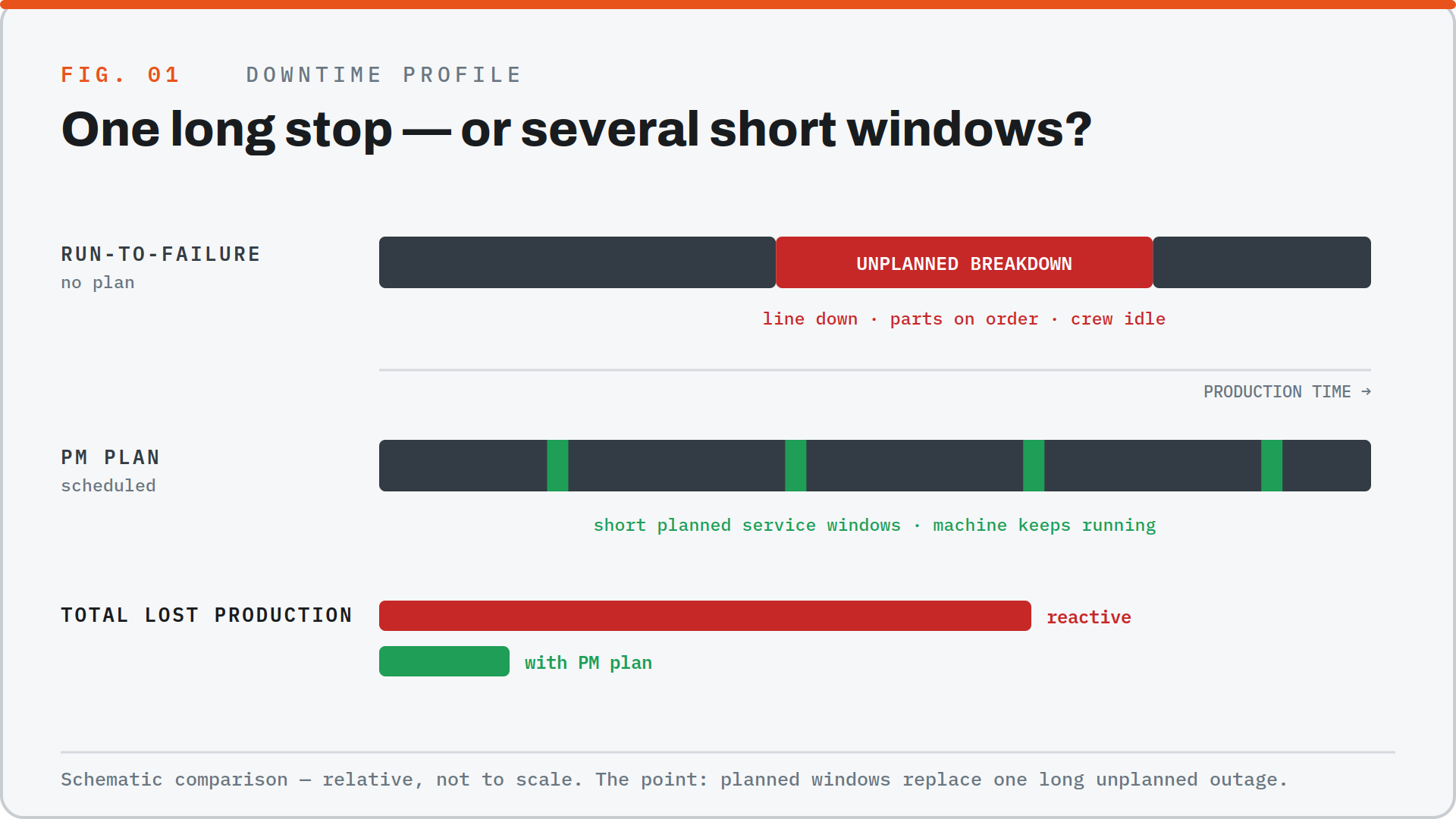
Fig. 1 — A run-to-failure machine takes one long, unplanned outage; a machine on a PM plan takes several short, scheduled windows instead.
A PM plan moves that work into windows you choose. Because a technician is inspecting the machine on a schedule, failing parts are usually spotted and replaced before they strand you. The result is fewer emergency calls, less idle crew time, and a production calendar you can actually trust.
How does preventative maintenance extend machine life?
Preventive maintenance extends machine life by keeping equipment within its accuracy band and stopping small problems before they cascade into big ones. A dry bearing, a worn belt, or a clogged filter is cheap to address on its own — but ignored, each one can take out a spindle, a drive, or a control board that costs many times more.
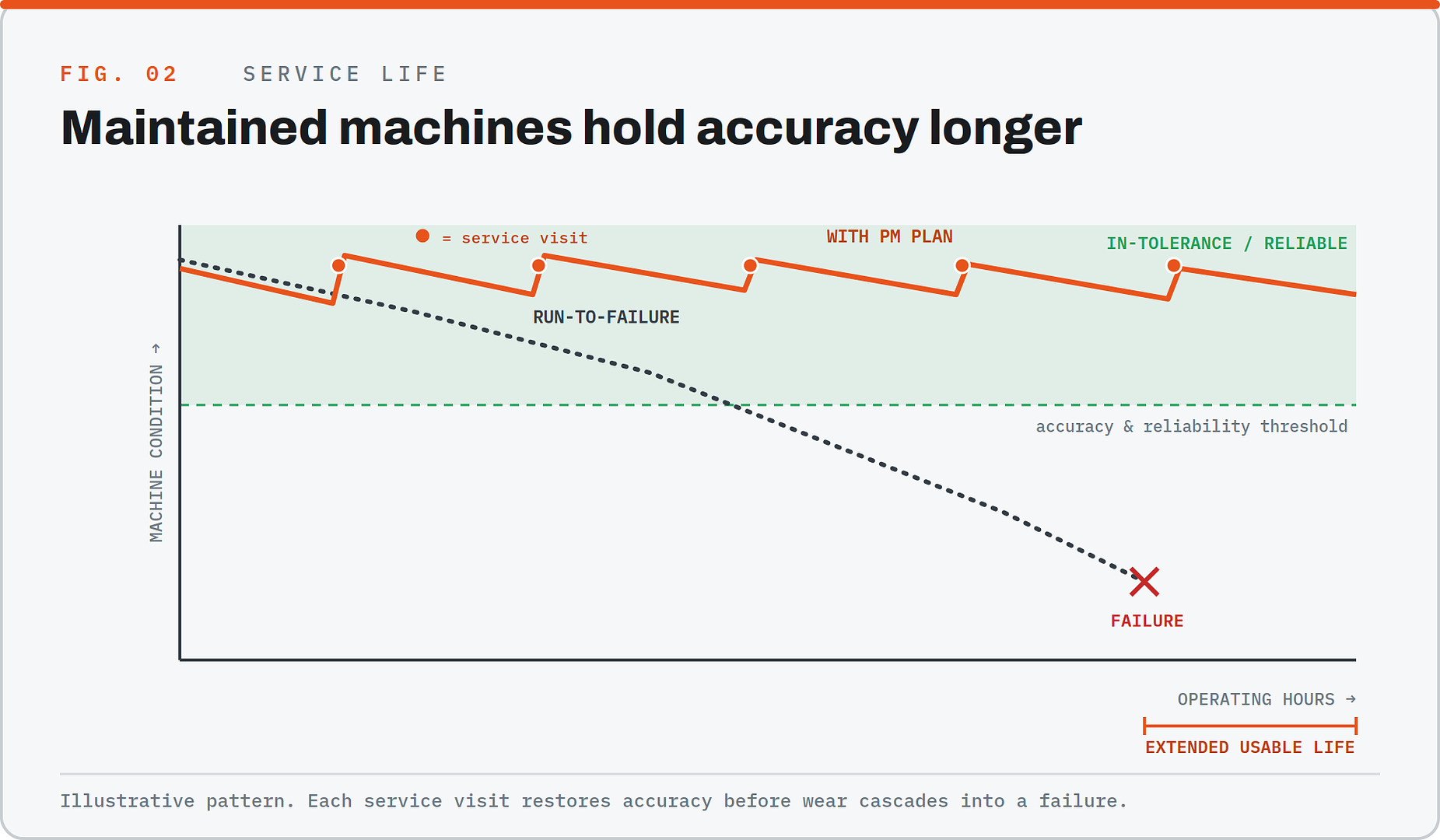
Fig. 2 — Each scheduled visit restores accuracy, keeping a maintained machine inside its reliable range long after a neglected one has dropped out of tolerance.
Regular lubrication protects rails and bearings, scheduled calibration preserves cutting accuracy and squareness, and replacing wear parts on time prevents the chain-reaction failures that retire a machine early. A well-maintained machine simply stays useful — and accurate — for far longer.
What does a PM visit from our technicians include?
Every preventative maintenance visit follows the same disciplined cycle, tailored to your specific machines:
- Inspect mechanical, electrical, and pneumatic systems for wear or damage
- Lubricate rails, bearings, and moving assemblies
- Calibrate cutting accuracy, squareness, and feed alignment
- Replace wear parts — belts, brushes, seals, filters, and blades — before they break
- Document machine condition with a service report and recommended next steps
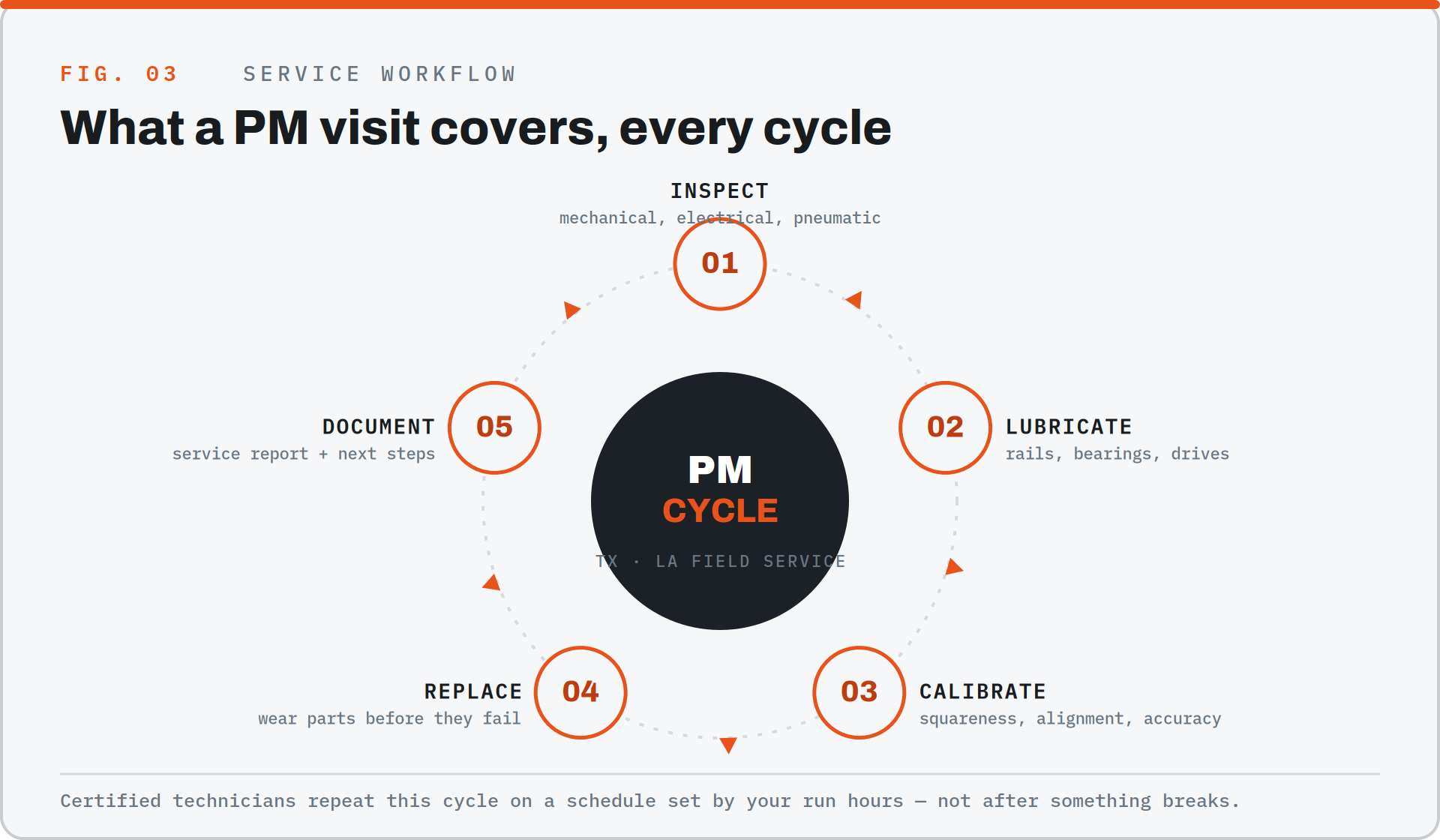
Fig. 3 — The recurring PM cycle our certified technicians run on every visit.
For a deeper breakdown of everything a plan covers, see our guide on what's included in a preventative maintenance plan.
Is a preventative maintenance plan worth the cost?
For any machine you depend on for production, planned maintenance almost always costs less than reactive repair once you count the full picture. The invoice for an emergency fix is only part of it — the bigger cost is usually the lost production, idle labor, and missed deadlines while the machine is down.
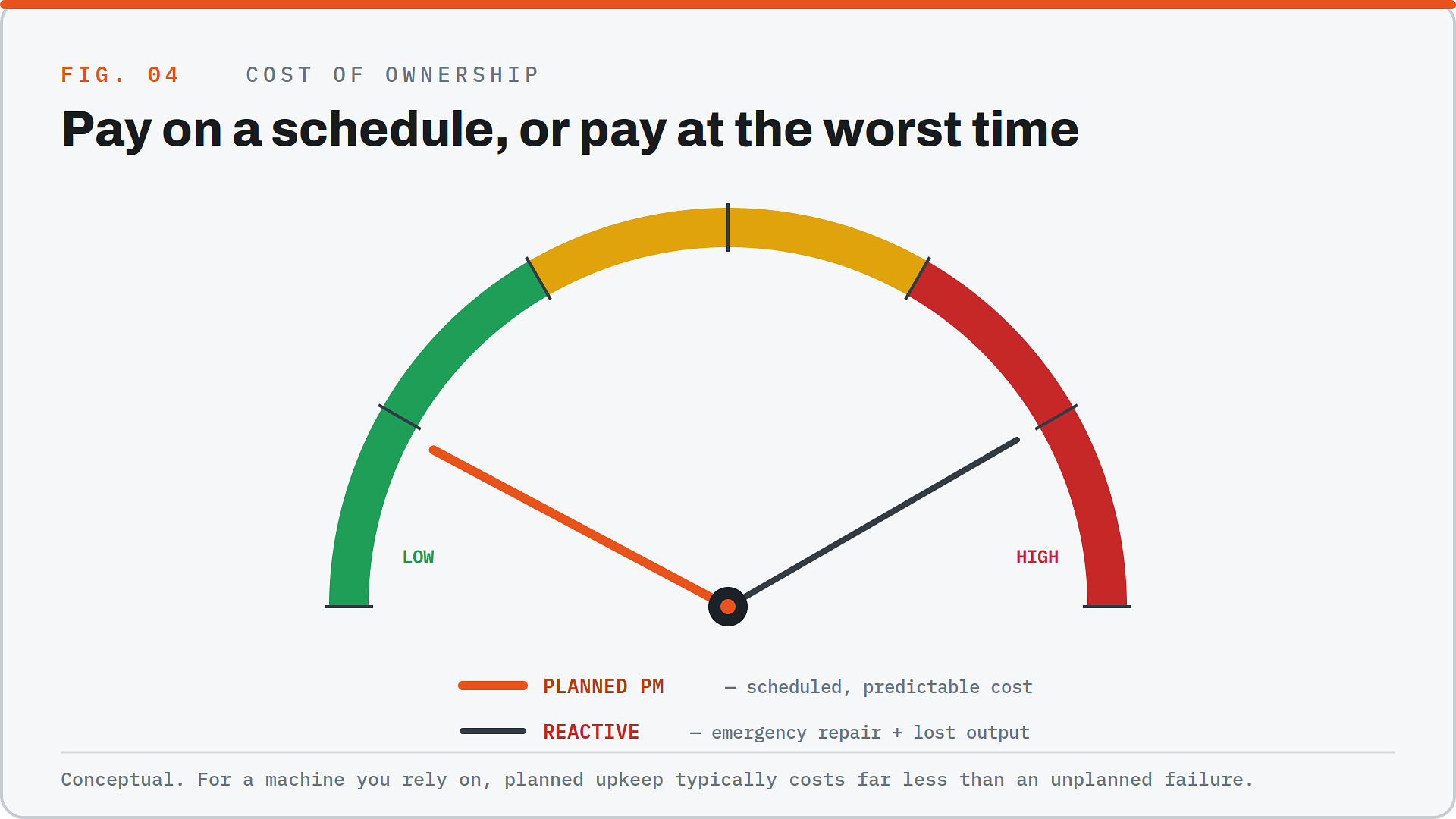
Fig. 4 — Planned maintenance keeps total cost of ownership low and predictable; reactive repair drives it up at the worst time.
Planned upkeep turns an unpredictable, spiky expense into a budgeted line item. You trade the risk of a large surprise bill for a smaller, scheduled one — and you keep the machine earning.
How often should you schedule preventative maintenance?
How often depends on the machine, the materials it cuts, and how many shifts it runs — a single-shift cabinet shop and a multi-shift production plant need very different schedules. The right interval is the one your technician sets after seeing how the equipment is used. As a starting point, most production machines benefit from professional service once or twice a year, on top of the daily and weekly checks your own operators perform.
Frequently Asked Questions
What is a preventative maintenance plan?
A preventative maintenance plan is a scheduled, recurring service program in which a certified technician inspects, cleans, lubricates, calibrates, and replaces wear parts on your machines before they fail — reducing unplanned downtime and extending equipment life.
Does preventative maintenance really reduce downtime?
Yes. By servicing equipment on a planned schedule, a PM plan catches failing parts early and moves repairs into windows you choose, replacing one long unplanned outage with short, predictable service stops.
Will a PM plan extend the life of used machinery?
It can. Consistent lubrication, calibration, and timely wear-part replacement keep a machine accurate and prevent small issues from cascading into major failures — which is how a quality used machine stays productive for years.
What machines can be put on a preventative maintenance plan?
We build plans for CNC routers, panel saws, wide belt sanders, edgebanders, stretch wrappers, and related woodworking and packaging equipment.
What areas do you cover for field service?
South Texas Machinery sells equipment nationwide, but our field service and preventative maintenance plans cover Texas and Louisiana.
How do I sign up for a preventative maintenance plan?
Contact South Texas Machinery to schedule an assessment. A certified technician will recommend a service interval based on your machines and production schedule. Call (303) 517-2500 or link to a service form to get started.